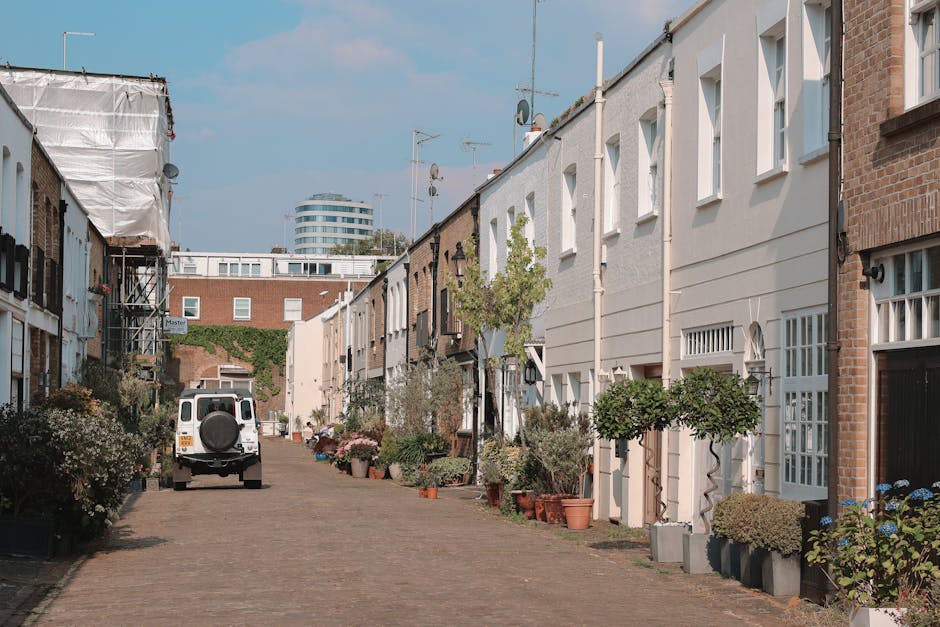
North End Road removals tips for narrow access properties
If you are moving on or near North End Road, you already know the problem: lovely London locations often come with awkward access, tight stairwells, limited parking, and roads that feel far too small for a full-scale move. That is exactly why North End Road removals tips for narrow access properties matter. The difference between a smooth move and a stressful one is usually not luck. It is planning, realistic vehicle choice, and a proper understanding of the property before the first box leaves the flat.
This guide walks through the practical side of narrow access removals in plain English. You will find step-by-step advice, common mistakes, real-world considerations, comparison points, and a checklist you can actually use on moving day. If you are moving a flat above a shop, a basement property, a terrace with no driveway, or a building with a tight communal entrance, this is for you. And yes, it can be done without chaos. Mostly.
Table of Contents
- Why narrow-access removals on North End Road matter
- How narrow-access removals work in practice
- Key benefits and practical advantages
- Who this is for and when it makes sense
- Step-by-step guidance
- Expert tips for better results
- Common mistakes to avoid
- Tools, resources and recommendations
- Law, compliance, standards and best practice
- Options, methods and comparison table
- Case study or real-world example
- Practical checklist
- Conclusion
- Frequently asked questions
Why North End Road removals tips for narrow access properties Matters
North End Road and the surrounding streets can be straightforward for everyday life, but removals are a different story. A van may fit on paper and still be a poor choice in real life if the entrance is awkward, the pavement is busy, or the property sits behind a shared gate or narrow staircase. That is why local removals planning needs to start with access, not with boxes.
Narrow access properties create specific risks: furniture snagging on turns, time lost waiting for parking, items getting damaged while carried at a strange angle, and extra strain on everyone involved. One missed detail can turn a simple one-trip move into several slow journeys. Lets face it, nobody wants a sofa wedged halfway through a hallway while the clock is ticking.
Good planning also protects neighbours, the building, and your own energy. When a move is organised properly, it feels calmer. The crew knows where they are going, the lifting route is clear, and there is less chance of bumping walls, scratching bannisters, or blocking the entrance. That kind of preparation is especially valuable in busy West London areas, where schedules, parking, and access are all closely connected.
If you are comparing move types, it can help to understand the wider service landscape too. Pages like removals in West Kensington, flat removals in West Kensington, and house removals in West Kensington are useful starting points when your property type plays a big role in the move.
How North End Road removals tips for narrow access properties Works
Narrow access removals work best when you treat the property like a logistics puzzle. The main question is not simply "How many items do I have?" but "How will each item get from inside the property to the vehicle without friction, delay, or damage?" That means measuring, checking routes, and choosing the right loading method before moving day arrives.
In practice, the process usually starts with a visual or phone-based assessment. A good mover will want to know about stair width, entrance height, turning space, lift access, any low ceilings, and whether the vehicle can stop near the door. If you have a basement flat, attic room, or top-floor apartment, those details matter even more. A small missing detail can change the whole plan. Seriously, a two-minute corridor can behave like a maze on moving day.
The next stage is deciding whether a standard van, a smaller removal vehicle, or a man and van setup makes more sense. Sometimes the best option is not the biggest one. On cramped streets and tight entrances, a nimble vehicle and a careful loading strategy often beat brute size. For many local moves, a man with van service in West Kensington can be the practical choice because it balances flexibility with hands-on loading support.
Finally, the route inside the property matters. A clear path from room to doorway reduces bumps and hesitation. Remove loose rugs, open doors fully, protect corners where needed, and keep fragile items separate from heavy loads. In a narrow-access move, every extra obstacle slows the job down.
Key Benefits and Practical Advantages
When narrow-access removals are planned properly, you do not just avoid problems. You gain some real advantages that often get overlooked.
- Less damage risk: Items are carried using a route and method chosen for the actual space, not an idealised one.
- Better time control: Smaller, smarter vehicles and staged loading reduce delays.
- Lower stress: A clear plan means fewer unknowns on the day.
- Improved safety: Tight hallways and staircases can be awkward, so a good plan helps protect people as well as belongings.
- More predictable costs: Planning for access issues in advance reduces the chances of surprise time overruns.
There is also a practical peace-of-mind benefit. If you know the move has been thought through, you will feel more in control. That sounds simple, but on moving day simple is gold. A half-hour saved at the start can feel like a whole evening saved by the end.
For items that need more careful handling, such as wardrobes, mirrors, or bulky chairs, it can be worth reviewing specialised help like furniture removals in West Kensington. The right handling approach often matters more than the size of the item itself.
Who This Is For and When It Makes Sense
This advice is relevant if you live or work in a property where the access route is not generous. That includes lots of real-life London setups, not just obviously awkward ones. Sometimes the building looks fine from the outside, then you meet the staircase and think, well, that changes things.
- Ground-floor flats with shared hallways or narrow doors
- Basement or lower-ground properties with steep steps
- Top-floor flats without a lift
- Terraced homes with restricted frontage
- Homes with tight internal corridors or curved staircases
- Small office spaces with limited loading access
- Student moves where speed and budget matter, but access is still tricky
It also makes sense if you are moving at short notice, because last-minute pressure makes narrow access problems harder to solve. In that situation, a service like same-day removals in West Kensington can be useful, provided the access details are explained clearly from the start.
If you are a student, a renter between tenancies, or someone downsizing from a larger home into a flat with tighter entry points, the same rules apply. Access planning is not only for big family houses. It is often more important in compact London homes.
Step-by-Step Guidance
Here is a practical way to approach a narrow-access move without overcomplicating it.
- Measure the tight spots. Check door widths, staircase turns, ceiling height, and lift dimensions if applicable. Measure large items too, not just the room.
- Map the route. Look at the path from the property to the vehicle. Count steps, bends, and any awkward corners.
- Identify parking reality. Can the vehicle stop close enough to the entrance? Is there loading space, and if not, how far will items need to be carried?
- Sort items by difficulty. Bulky furniture, fragile items, and awkward shapes should be planned first, not left until the end.
- Choose the right service level. A smaller vehicle or hands-on man and van team may be a better fit than a large lorry in restricted streets.
- Pack strategically. Use strong boxes, protect corners, and avoid overfilling. Heavy items in smaller boxes are easier to carry down tight stairs.
- Prepare the property. Remove clutter, secure pets, protect floors where needed, and keep walkways clear.
- Plan loading order. Load awkward or fragile items in a sequence that avoids repeated reshuffling.
- Keep communication open. Share any surprises immediately. A low ceiling, locked gate, or awkward neighbour parking arrangement matters.
- Allow buffer time. Narrow access often takes longer than people expect. That is normal. Build a bit of breathing room in.
A small but useful detail: if you are packing on the morning of the move, label boxes by room and priority, not just by content. "Kitchen essentials" is more useful than "miscellaneous," especially when everything is stacked near a narrow doorway and the kettle seems to have disappeared into another dimension.
Expert Tips for Better Results
These are the sorts of things that tend to make the biggest difference on the ground.
1. Use the smallest sensible vehicle, not the biggest possible one
It is tempting to think a larger van saves time. Sometimes it does. But if the access is tight, a smaller vehicle can save more time overall because it gets closer to the property and reduces carrying distance. That often matters more than raw capacity.
2. Prioritise item shape, not just item size
A flat-pack table may look manageable, yet the awkward angle can make it worse than a heavier box. Long items, tall wardrobes, and sofas usually need the most planning. A narrow hallway is rarely kind to anything with a swing point or protruding corner.
3. Protect the route, not just the furniture
People often wrap the item and forget the walls. In tight properties, bannisters, door frames, and stair edges are just as likely to suffer. Using protective covers, felt pads, or simple floor protection can be worth the effort.
4. Pre-separate what must not be rushed
Fragile pieces, valuables, documents, and essentials should move in a clearly defined group. If you are working with a man with a van in West Kensington, that kind of organisation keeps the whole process calmer and reduces the chance that key items get buried under furniture straps and boxes.
5. Give the mover the awkward truth early
This is a big one. If there is a 3rd-floor walk-up, a narrow stair bend, or a loading restriction, say so upfront. It is much easier to solve a problem before the van arrives than after everyone is already carrying a wardrobe through a tight entrance. Truth be told, the "surprise" approach helps nobody.
You can also use supporting services to make the day easier. For example, packing and boxes in West Kensington can help if you need better materials, and storage in West Kensington can be a smart buffer if you are moving in stages or waiting for access at the new place.
Common Mistakes to Avoid
Most narrow-access move problems are preventable. The issue is usually not bad luck, but one of a few familiar mistakes.
- Underestimating the access route: People focus on the front door and forget the stairs, corridor, or gate.
- Booking the wrong vehicle size: Too big can be just as problematic as too small.
- Not mentioning parking limits: A van may be fine if it can stop nearby; it becomes far less practical if it cannot.
- Leaving packing too late: Last-minute packing creates clutter and slows moving crews down.
- Forgetting specialist items: Pianos, large mirrors, and delicate furniture need different handling.
- Ignoring building rules: Some blocks have booking windows, lift reservations, or access instructions that matter.
- Trying to force oversized furniture through a route that will not take it: Sometimes the right answer is disassembly, not brute force.
A lot of headaches come from trying to save ten minutes and losing an hour. That is the moving day trap. It happens more often than people admit.
If your move includes a piano or similarly delicate item, specialist planning becomes even more important. See piano removals in West Kensington for the kind of care and coordination that can be needed for heavier, more sensitive pieces.
Tools, Resources and Recommendations
You do not need a warehouse full of gear to manage a narrow-access move properly. A few sensible tools and resources make a real difference.
| Tool or resource | Why it helps | Best used for |
|---|---|---|
| Measuring tape | Confirms whether items and turning spaces actually fit | Doorways, stair turns, furniture dimensions |
| Furniture blankets | Reduces scuffs and edge damage | Wardrobes, tables, wooden frames |
| Strong cartons and packing tape | Helps keep loads manageable and secure | General household packing |
| Trolley or sack barrow | Useful for level routes and small kerbside transfers | Boxes, small appliances, short carry distances |
| Floor and corner protection | Protects the property during tight manoeuvres | Hallways, stairs, entrances |
| Clear labels and room markers | Makes unloading faster and less chaotic | Any move with multiple floors or small rooms |
On the service side, it helps to work with a provider that can advise on access, vehicle choice, and timing rather than just turning up with a van and hoping for the best. Pages like removal services in West Kensington, removal van options in West Kensington, and the services overview are useful if you want to compare what is available.
For broader background on the area and local living conditions, you may also find a local walking guide to Kensington and local views on living in Kensington interesting. They are not moving manuals, of course, but they do give a feel for the streets and property styles you are likely to meet.
Law, Compliance, Standards and Best Practice
For most household moves, the main compliance issues are practical rather than legal, but they still matter. Parking restrictions, access limitations, estate rules, and building management requirements can all affect how a move is carried out. If the vehicle needs to wait on-street, you should check local parking conditions in advance rather than assuming it will be fine.
Health and safety is also a real part of the picture. Safe lifting, sensible load limits, and proper handling techniques are standard best practice, especially where stairs and narrow passages increase the risk of slips or knocks. A responsible mover should be clear about how items are handled and whether any job needs more than one person.
In commercial or shared-building settings, there may also be management expectations around lift bookings, time windows, and use of communal areas. If you are unsure, it is worth reviewing the building instructions carefully. A short conversation with the building manager can save a lot of friction later.
For trust and process information, useful reference pages include health and safety policy details, insurance and safety information, and terms and conditions. If you want to understand how payments and bookings are handled, payment and security is also worth a look.
One more thing: sustainability matters too. If you are decluttering as part of the move, you can reduce waste by reusing boxes, donating usable items, and checking the site's recycling and sustainability guidance. Small effort, decent payoff.
Options, Methods, and Comparison Table
Choosing the right moving method is often the most important decision in a narrow-access property. The best option depends on distance, item volume, and how close the vehicle can get to the door.
| Method | Best for | Pros | Trade-offs |
|---|---|---|---|
| Man and van | Small to medium moves, tight streets, quick local jobs | Flexible, nimble, usually easier for restricted access | Less capacity than larger vehicles |
| Full removal team | Larger household moves, multiple rooms, heavier furniture | More manpower, better for complex handling | Needs stronger planning and sometimes more space |
| Split move with storage | Phased moves or uncertain access at one end | Reduces pressure, allows flexible timing | Involves extra handling and coordination |
| Specialist item move | Pianos, oversized furniture, fragile valuables | Better protection and handling for difficult items | More planning, often more specific requirements |
For many North End Road properties, a compact vehicle with experienced handling is the sweet spot. You want enough capacity to keep the move efficient, but not so much vehicle that the access becomes the bottleneck. That balance is the whole game, really.
Case Study or Real-World Example
Picture a typical move from a third-floor flat on a busy stretch near North End Road. The property has a narrow stairwell, no lift, and a loading area that is only available for a short window. On the face of it, this is exactly the kind of job that can turn messy if the plan is vague.
What made the move manageable was not anything magical. The items were measured in advance, the larger furniture was identified early, and the most awkward pieces were separated from the general boxes. A smaller removal vehicle was chosen so it could get closer to the building, and the team knew which items had to come out first. The stair route was cleared before loading began, and fragile boxes were kept away from the heavier furniture.
The result was simple: fewer pauses, less damage risk, and a calmer day overall. Not perfect, because moving days never are, but controlled. And controlled is what you want when the hallway is tight enough to make everyone walk sideways for a bit.
That sort of planning is exactly why local knowledge helps. If you are unsure what your own setup needs, it is worth speaking to a team that regularly handles West Kensington removal companies and understands the realities of local streets and building layouts.
Practical Checklist
Use this checklist a day or two before the move. It is simple, but it catches the annoying bits.
- Measure large furniture and the narrowest points in the route
- Confirm parking and loading arrangements
- Tell the mover about stairs, lifts, gates, and internal bends
- Separate fragile, valuable, and essential items
- Use strong boxes and avoid overpacking them
- Label boxes by room and priority
- Clear hallways, entrances, and landings
- Protect floors, door frames, and corners where needed
- Check building or landlord instructions if applicable
- Keep keys, documents, chargers, and medication easy to reach
- Build in extra time for tight access and parking delays
- Have a backup plan for items that may not fit as expected
Expert summary: Narrow-access removals are won or lost before the van arrives. If the route, vehicle, and packing method all match the property, the move gets easier almost immediately. If any one of those is wrong, the whole day can feel harder than it needs to be.
Conclusion
North End Road removals tips for narrow access properties come down to one thing: respect the space you are working with. Tight stairs, limited parking, and compact entrances are not deal-breakers. They are just conditions that need a smarter plan. Measure properly, pack with intent, choose the right vehicle, and be honest about the awkward bits. That is the boring answer, and the boring answer is usually the best one.
Whether you are moving a flat, a family home, or a small office, narrow access does not have to turn the day into a headache. With the right preparation and the right support, the move can stay steady, efficient, and far less stressful than you feared. And that little bit of calm at the end? It matters. It really does.
If you want help planning your move or need advice on access, timing, or the best service fit, explore the relevant pages above or get in touch for a straightforward conversation.
Get a free quote today and see how much you can save.
Frequently Asked Questions
What is the best removals option for narrow access properties on North End Road?
Usually, the best option is a compact vehicle with experienced loading help, such as a man and van or a smaller removal service. The right choice depends on how close the vehicle can get to the property, the size of the items, and whether stairs or tight turns are involved.
How do I know if my furniture will fit through a narrow stairwell?
Measure the widest part of the furniture and compare it with the narrowest part of the route, including stair turns and doorframes. If the item looks borderline, disassembly may be the safest route. Sometimes the visual test is not enough, so measuring is worth the extra few minutes.
Should I book a larger van to save time?
Not always. A larger van can be less efficient if it cannot park close to the property. On narrow streets, a smaller vehicle that loads quickly and stops nearer the entrance is often the better practical choice.
What should I tell the removals team before moving day?
Tell them about stairs, lift access, low ceilings, parking restrictions, long carry distances, gates, and any large or awkward items. The more accurate the access details, the better the move plan will be.
Can I manage a narrow-access move myself?
For a very small move, sometimes yes, but it depends on the property and the furniture involved. If you have heavy items, lots of stairs, or parking issues, professional help is usually safer and less stressful.
How much extra time should I allow for a difficult access property?
There is no fixed rule, because every property is different. A narrow stairwell, a long carry, or awkward parking can all add time. A sensible buffer is usually better than trying to squeeze everything into a tight schedule.
Do I need special packing for a narrow staircase move?
Yes, in many cases. Smaller, well-sealed boxes are easier to carry than oversized cartons packed too heavily. Fragile items should be wrapped properly, and furniture should be protected at corners and edges.
What if my building has no lift?
Then planning becomes even more important. Make sure the mover knows the floor level, stair condition, and whether there are any rest points or tight turns. No lift does not mean impossible, just more deliberate.
Is storage useful if I cannot move everything in one go?
Yes. Storage can be helpful if the new property is not quite ready or if access is too tight for everything at once. It can reduce pressure and let you move in stages instead of forcing everything into one difficult day.
How can I reduce the chance of damage during a narrow-access move?
Use proper packing, clear the route, protect doorframes and walls, and avoid rushing awkward items. The biggest damage risks usually come from trying to force the pace or moving furniture without enough space to turn safely.
Are there any local access issues I should check in West Kensington or nearby?
Yes. Parking restrictions, timed access windows, and busy residential streets can all affect the move. It is a good idea to check the street layout and building rules in advance so the removal team can plan accordingly.
How do I get a quote for a narrow-access move?
Provide the move date, addresses, floor levels, access details, item list, and any parking restrictions. A clear quote depends on clear information, especially for properties with tight access. If you want to start that process, the contact page is the easiest place to begin.